A 1:200 competition model, nine days out, delivered through four revisions.
The client
An architecture practice that enters national competitions and runs into the same squeezed presentation calendar every time. This is a fictional scenario — not real client work. It is written to show how tooling-free production behaves on a job of this shape.
The need
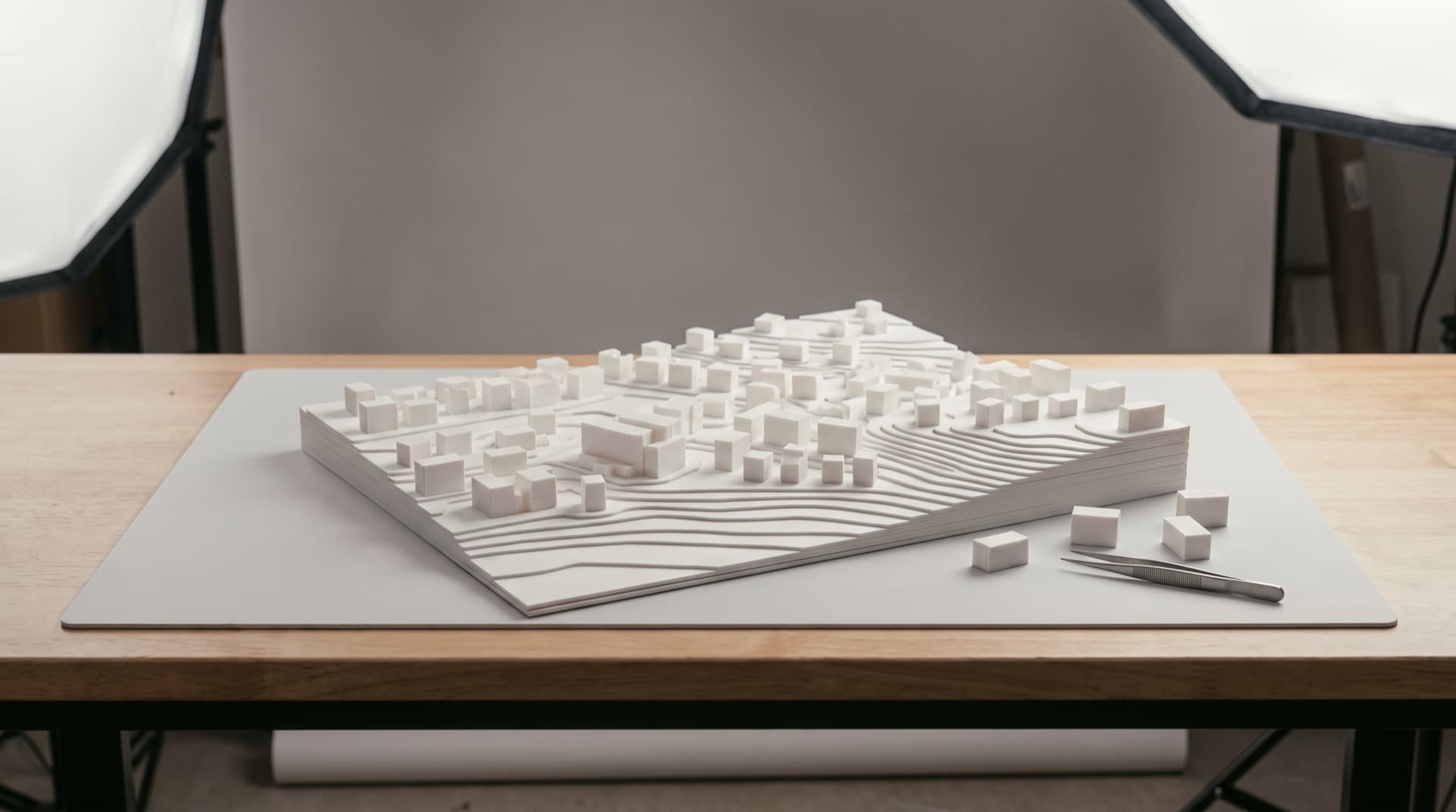
A 1:200 urban design model is needed nine days before submission. Hand-building takes at least three weeks, so the calendar does not close. And competition models keep changing until the jury presentation: this is not a job you build once and finish.
The solution
The model is split into roughly 60 parts; the massing prints in parallel across the A1 fleet while the topography plates are laser cut. First assembly stands on day four. The facade decision changes twice before the jury presentation — only the six affected parts are reprinted, not the whole model. For the white presentation finish, every mass is sanded and sealed with matte varnish.
By the numbers
What it shows
The same logic holds for any practice entering competitions on a tight presentation calendar: a model split into parts lets a revision reprint the part, not the whole.